Women in Technology
  • About Us
    • Our Mission and History
    • WIT Leadership
    • Annual Reports
    • News and Insights
    • WIT Career Center
  • Programs
        • Pre-Career
          • WIT Girls
          • WIT Campus
        • Careers in Action
          • WIT Early Career
          • WIT Forums
          • WIT Elevate
          • WIT Technology Uncorked
          • WIT SMP Graduate Success Network
        • Community-Wide Events
          • WIT Awards
          • WIT Connect
          • WIT Careers in Action Summit
          • WIT Socials
        • Events Calendar
  • Support
    • Partnerships
    • Strategic Volunteering
    • Donate
    • Shop
  • Join WIT
  • Donate

Careers in Action Summit Recap

October 21, 2026 by lfacer

On October 9, 143 members of our community came together for the Women in Technology (WIT) Careers in Action Summit. Ninety-nine women in tech spent the morning focused on their next career move, and 44 speakers, coaches, and volunteers showed up to help them get there.

We created the Summit to bring together the most impactful elements of WIT Forums, Technology Uncorked, and Career Exploration into one morning of connection, learning, and professional growth. The room brought together college students, women just starting their careers, professionals exploring new roles or returning to tech, and women working toward leadership. Every part of the morning was intentionally designed to meet attendees where they are in their career journeys and help them leave with new connections, practical insights, and a clear next step toward their goals.

Inside the Summit

Breakfast and networking came first, so attendees had a chance to meet other women and allies in tech before the program started.

Our mainstage panel, “The Future of Women’s Careers: Leading Through Change in a New World of Work,” opened the program. Executives, technologists, and talent leaders spoke about AI, career paths, and leadership. They also discussed Gen Z and Gen Alpha in the workplace and which credentials matter today, then took questions from the audience.

Once the panel ended, attendees split up for Skill Sparks, our short, hands-on breakout sessions. Each one focused on a specific takeaway, and the average group was about 25 people.

Coaching Corners ran alongside Skill Sparks. Attendees sat down with a coach to work on a resume and career storytelling or to practice talking about their experience in an interview. Our coaches held 95 of these sessions over the course of the morning.

Industry Insights was open all morning for anyone who wanted to drop in. Attendees talked with WIT corporate partners who are actively investing in women in tech about skills, career paths, and the day-to-day work at their companies. The participating companies were CDW, Fiserv, Georgia-Pacific, Infor, QTS, State Farm, The Coca-Cola Company, The Home Depot, and Truist.

The Impact

Everyone who completed our post-program survey said they feel more confident about their tech career, and 65% described that change as “big” or “strong.” Seventy-eight percent said they now see their next step clearly. Most of the rest said they’re getting there.

Many attendees plan to follow through quickly. Seventy-four percent expect to use their resume, interview, or branding tools this week, and the others know which one they’ll start with. Almost everyone (96%) made at least one new connection at the Summit. Forty-three percent made four or more, and 22% made six or more. Eighty-three percent said the event made them more committed to staying in tech.

Among survey respondents, 96% attended the panel, 87% visited Industry Insights, and 74% had at least one coaching session.

Skill Sparks in Action

Of the attendees who filled out the survey, 74% went to at least one Skill Sparks session. Sixty-five percent left with something they could use right away, like a draft, a plan, or a prompt, and 70% feel more confident putting what they learned into practice. Sixty-one percent know their next step. Forty-eight percent said they’ll take it this week, and 22% plan to within 30 days.

Get Credit for What You Already Do drew the most interest. Attendees came away with two or three phrases to bring to their next performance conversation or one-on-one. Your LinkedIn Profile Is Your First Interview and AI for Your Job Search were close behind. The LinkedIn session helped people update their profiles to reflect where they want to go next. In the AI session, attendees used AI tools to improve their LinkedIn profiles and resumes and to rehearse interview answers.

Attendees in Build a Network That Actually Works for You created a 90-day relationship-building plan. Respond Without Retreating gave people go-to language for pushing back in three common workplace situations. In Design Your Next Chapter, each person wrote a next-chapter statement and chose one step to get started.

In Their Words

“This is a great event of inspiring women!”

“This was SO INFORMATIVE!”

“I think there was just the right amount of parts going on… and the right amount of time too (the 4 hours).”

“If you host these more frequently that would be amazing.”

Thank You

We’re grateful to our speakers, coaches, volunteers, and partner companies for making the Summit possible. And to every attendee who spent the morning with us, thank you for showing up ready to work on your careers.

Check out the photo album here.

Interested in more programming to support your career? Check out our calendar of events to see what’s coming up.
Filed Under: Event/Program Recap, WIT Careers in Action Summit

WIT Campus Career Exploration Day 2026 Recap

October 6, 2026 by lfacer

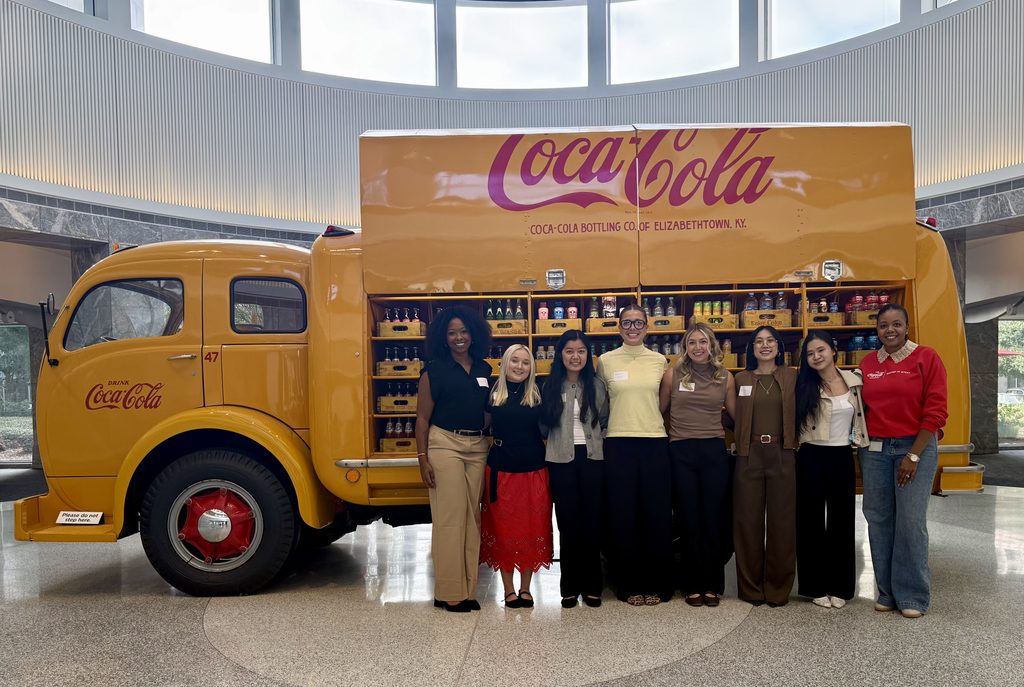
Eight women stand in front of a vintage yellow Coca-Cola delivery truck inside a building.

Six Companies, One Day of Possibility

On Friday, September 25, college women from WIT Campus chapters across Georgia stepped out of the classroom and into the workplaces of six leading WIT Strategic Partner companies: The Coca-Cola Company, Cox Enterprises, Fiserv, Norfolk Southern, Salesforce, and State Farm.

Women in Technology (WIT) Campus Career Exploration Day gives students a real look at what a career in technology can be. Over the course of the day, they toured offices, worked through case studies alongside company teams, experienced practice interviews, and interacted directly with women leading in tech.

The Results

Campus Career Exploration Day exceeded all four of its program goals. WIT surveyed students before and after the day, and the change showed up in every area:

  • Job readiness: 98.7% agreed they have the skills and preparation to apply for jobs, up from 67.4%.
  • Career pathways: 91.4% agreed they understand the career paths open to them and the roles that fit them, up from 70.3%.
  • Connections: Every student who responded left with at least one new contact in technology, and 71.1% made three or more.
  • Belonging: 94.7% felt they belong in the tech community, up from 68.6%.

Uncertainty nearly disappeared. Before the day, about one in four survey answers were neutral. Afterward, fewer than one in twenty were.

Afterward, many of them posted about the day on LinkedIn. This recap draws on what they wrote about their experiences.

There’s No Single Path Into Tech

If one message came through louder than any other, it was this: there is no one right way to build a career in technology.

A computer science student entering her final year at college said hearing from women already at State Farm reminded her “that there isn’t one perfect path into tech.” Another student, who has many interests within tech, called the day “a great reminder that there isn’t one set path you have to follow.”

At The Coca-Cola Company, students heard from women working across a wide variety of technology careers. One student said it showed her how many different paths exist in technology, and how valuable it is to learn from women willing to share their experiences and advice.

At Salesforce, a panel of professionals talked about how many shifts a career can hold and how rarely the path is linear. For one student who changed her major from healthcare into tech, that advice landed close to home. She said it felt like someone telling her, “you’re exactly where you need to be in this moment.”

At Fiserv, an information systems student interested in marketing learned that you don’t have to stay in one role for your whole career. Seeing how people moved across different teams showed her how to explore, discover what she enjoys, and keep growing.

For students still deciding where they fit, that permission to explore matters. It turns uncertainty into curiosity.

Seeing Technology and AI at Work

Students didn’t just hear about technology. They saw how it runs real businesses every day.

At State Farm, an AI prompting game let students test how changing the way they communicate with AI changes the results they get. One computer science sophomore who has been exploring AI through her own projects said she “loved getting to see that in action.” A senior said it was rewarding to see concepts from her coursework applied outside the classroom. Another student heard directly from software engineers about how AI and prompt engineering are used on the job.

At Fiserv’s Alpharetta office, students learned how technologies like Clover, tap-to-pay, and AI show up in everyday transactions and are shaping the future of financial services. At Norfolk Southern, a graduate student was struck by how a company with roots in the 1800s has transformed into an organization built on data and innovation, including AI-driven approaches to rail safety. She said it gave her “a new appreciation” for how technology keeps transforming traditional industries.

Learning by Doing

The most memorable moments came when students rolled up their sleeves.

At Norfolk Southern, teams took on the “Hurricane Lucille: Railroad Response Team Challenge,” a case study on how the company might respond to the operational fallout of a major hurricane. One student called it a chance to practice problem-solving, collaboration, and decision-making. Another worked side by side with employees from Engineering, Safety, IT, and the Network Operations Center, exploring how GIS mapping, signal monitoring, sensors, and large-scale data keep trains moving. A few students also tried a train-control simulation.

At Cox Enterprises, students went behind the scenes of the hiring process, picked up tips for building a standout resume, and participated in mock interviews led by Cox early career recruiters. One student said the feedback and conversations were “incredibly valuable” as she prepares for her next career step.

At Salesforce, workshops helped students explore different roles and experience day-to-day responsibilities. Students also had their resumes reviewed and toured the company’s tower.

At State Farm, workshops and hands-on activities, like learning how important AI prompts are to creating quality output,  gave students practical skills they could take straight back to campus.

Career Skills You Don’t Learn in Class

Beyond the technology, students left with advice they can use right away.

At Fiserv, one student came away with guidance on owning the room with confidence, understanding the difference between a mentor and a sponsor, staying open to pivots, and preparing for future opportunities. Another valued learning how to present herself professionally, build connections, and navigate her career with intention.

At Norfolk Southern, a panel of women leaders encouraged students to reflect on each day, build strong critical-thinking skills, and know their values well enough to write them down. Another student summed up her biggest takeaways from the panel: stay curious, be adaptable, build meaningful connections, and never be afraid to use your voice.

These are the lessons that often take years to learn on the job, yet, thanks to this experience, WIT Campus students got a head start in a single day.

Confidence and Belonging

For many students, the biggest shift wasn’t about skills. It was about seeing themselves as part of the technology workforce.

A senior at State Farm, graduating in December, shared that balancing classes, a capstone project, and a job search had left her unsure of what comes next. After a day of conversations with the women she met, she said her energy and confidence “grew exponentially.” One line she heard that day stayed with her: “We all received help at some point to get where we are today.”

A sophomore left “reminded that I don’t have to have everything figured out yet.” Her takeaway was simple: keep showing up, keep learning, and keep putting herself in spaces where she can grow.

And a graduate student said the day reminded her why she chose technology in the first place: “There is always something new to learn, problems to solve, and industries to transform.”

One computer science student was so inspired that she made WIT Campus Career Exploration the subject of her very first LinkedIn post.

A Community That Lasts Beyond the Day

WIT is more than a network. It’s a community, and WIT Campus Career Exploration Day showed that in action.

Students came from college and university campuses across the state of Georgia. One chapter president traveled from Statesboro to Atlanta with three fellow Georgia Southern members to spend the day at Norfolk Southern together.

A WIT Campus chapter president who spent the day at The Coca-Cola Company left excited to keep growing, networking, and building her future in technology, alongside the other women she connected with there.

The connections didn’t end when the day did. Students’ LinkedIn posts filled up with comments from peers they met, often from different schools and even different host sites, saying how glad they were to have connected. Host company professionals joined in too. One host professional told a student her “curiosity, initiative, and eagerness to learn really stood out.” At Salesforce, another told a student, “You’re gonna absolutely crush it in tech!”

For one student at Cox Enterprises, the day made a long-held goal feel closer. She has admired Cox for years and left hoping to one day call it her workplace.

Thank You to Our Hosts

WIT Campus Career Exploration Day is only possible because WIT corporate partners open their doors. Thank you to The Coca-Cola Company, Cox Enterprises, Fiserv, Norfolk Southern, Salesforce, and State Farm, and to every panelist, volunteer, and team member who gave their time, shared their stories, and made students feel welcome.

When companies invest a day in students, the impact reaches far beyond it. Students leave with sharper skills, clearer goals, and the confidence to pursue them. Host companies meet the next generation of tech talent up close.

Hosts felt the impact, too. At The Coca-Cola Company, one host told students, “We loved spending the day with all of you!” One of the Norfolk Southern leaders who helped build the partnership said the students “asked thoughtful, engaging questions and demonstrated genuine curiosity.” As she put it, “Investing in future talent is one of the most rewarding parts of what we do.”

At Cox Enterprises, a product manager who helped lead the day saw herself in the students. Just two and a half years ago, she was in their seat, wondering what a career in technology would look like for her. This time, she was the one showing them, and reminding them there’s a place for them “no matter their major, specialty, or experience.”

Explore What’s Next

The WIT Campus program connects college women interested in tech with career opportunities and mentorship. Whether you’re a student ready to explore or a company ready to host, there’s a place for you in our community.

Learn more about WIT Campus

Explore. Pursue. Persist. Lead.

Filed Under: Event/Program Recap, WIT Campus Tagged With: WIT Campus

The Retention Equation. Insights from the September WIT Forum

September 22, 2026 by lfacer

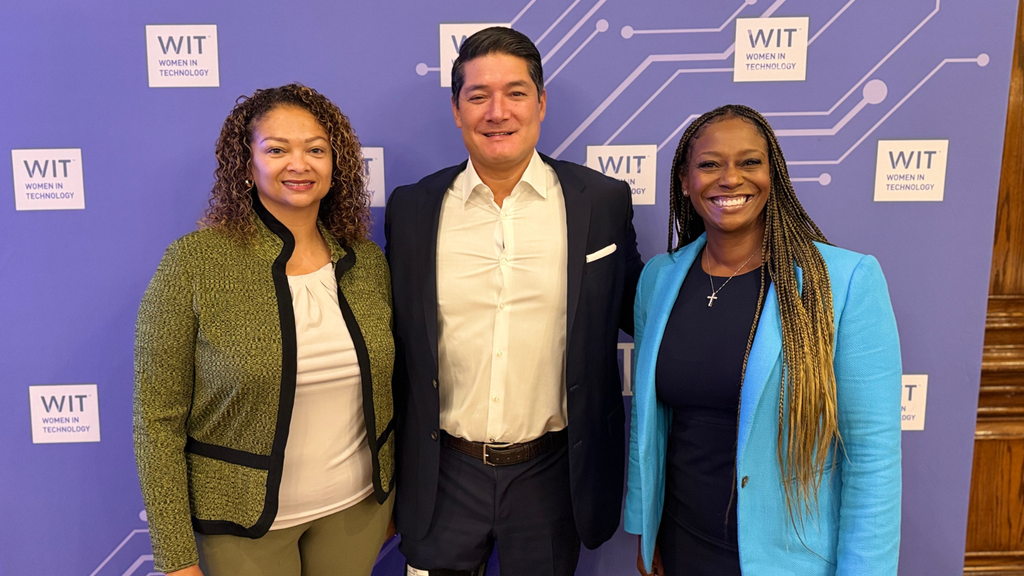
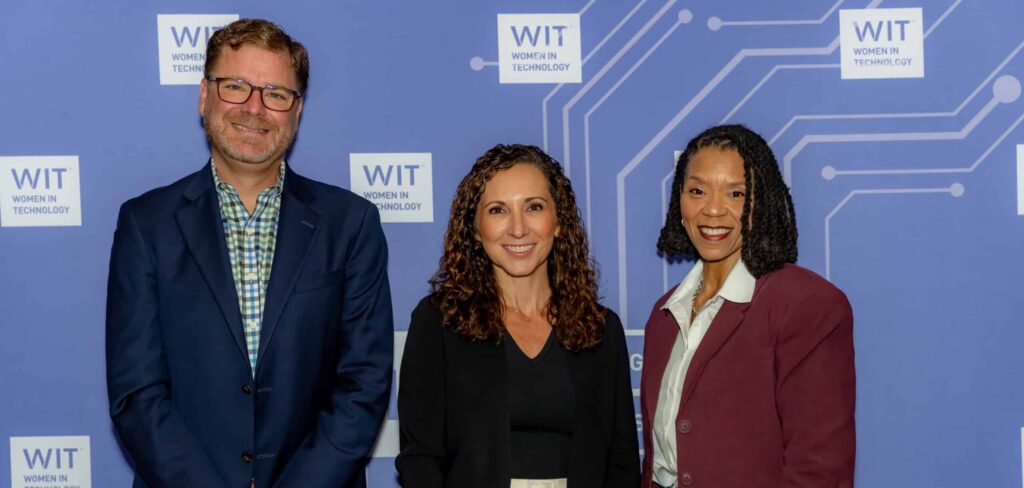
Three people stand and smile in front of a blue Women in Technology (WIT) backdrop at an event. Two women and one man are dressed in professional attire.

September WIT Forum | September 16 | 7:30–9 am ET | Maggiano’s Buckhead

Presented by Tier4 Group

The September WIT Forum tackled a subject every technology professional runs into at some point, whether they’re managing a team or building their own career: retention. Presented by Tier4 Group, “The Retention Equation: Personal Investment + Organizational Responsibility” asked what it actually takes to keep good people, and made clear the answer runs in both directions. It’s not just what organizations owe the talent they’ve invested in. It’s what individuals owe their own career journeys, the choices they make about where to grow and when to move on. Attendees, themselves technology professionals navigating that exact equation, gathered over breakfast before settling in for a panel discussion, table conversations, and audience Q&A.

Katie Logan, Chief Strategy Officer at Gozio Health, moderated a panel that brought together Oneka Jefferson-Cornelius, Senior Director of Human Resources and Atlanta Hub HR Lead for Digital Technology & Data at Cargill, and Mike Park, SVP and Chief Information Officer at Infor. Katie opened by pulling the word “retention” apart. It comes from the Latin retinere, to hold back, the same root as detain and contain. The point landed early and set the tone for the rest of the morning: retention isn’t the absence of people leaving, it’s the presence of reasons to stay. Those are two different measurements, and two different plans.

From there the conversation split cleanly along the line the title promised. On the organizational side, Mike talked about giving people the tools and room to grow rather than trying to hold them in place, including making sure teams have real access to AI so they don’t fall behind. Oneka described the work being done to future-proof the company’s tech organization over the next 12 to 18 months, from individual development plans for every employee to a hard rule held as a leadership standard: if someone doesn’t want to be held in a role, it’s the leader’s job to help them move up, out, or over, inside the company or outside it. 

On the individual side, both Oneka and Mike pushed back on the idea that a company should already know what someone wants from their career. Employees, they argued, have to own that story themselves, document their goals, ask for stretch assignments, and treat a next move as something to run toward rather than something to run from. Katie closed that thread with a line that landed hard in a room of women in tech: that too many of us still undersell ourselves or wait to be asked, instead of raising our hand.

Notable Quotes

“Retention comes from the Latin retinere, to hold back, the same root as detain, the same root as contain. Maybe we think about it not as the absence of people leaving, but the presence of reasons to stay.” 

“We want people to be excited about staying, as opposed to containing people. So we’re trying to give them the tools and the environment to grow in their roles, and really encouraging them to be curious on their own.”

“I am not a firm believer that any organization should hold someone who doesn’t want to be held. It’s my job to clear barriers and help you move up, out, or over, whether that’s in this organization or outside of it. I didn’t fire you. What I did was untether you.” 

“There are times when people do leave an organization because the dynamic has shifted, especially for women, women of a certain age, women of a certain background. Those things aren’t within our control. But you can control the controllables.”

Tactical Takeaways

For your own career:

  • Write down your own career narrative — goals, wins, what you’re building toward — rather than waiting for a manager to infer it. One panelist put it directly: it’s on you to give your leader “the story to tell.”
  • Before a 1:1 or review, ask for something specific rather than a general “what do you think.” A targeted ask reads very differently than “I’m ready to be promoted, what do you want to do?”
  • Use the “running to, not from” gut check before making a move: if you’re chasing something that excites or challenges you, that’s a good sign. If you’re only trying to escape something, slow down.
  • Raise your hand for the tools, not just the assignments. Multiple panelists pointed to AI fluency specifically as something people wait to be invited to instead of asking for outright.
  • Think in skills, not titles. Treat your capabilities as portable across roles and industries rather than tying your identity to a job description that may already be outdated by the time it’s posted.

For managers and organizations:

  • Equip teams with real AI tools and clear governance, so people are experimenting safely and openly rather than finding workarounds or falling behind quietly.
  • Ask people directly what they need to do their best work, and ask it as an open question, not a checklist. The exact prompt one panelist uses: “What needs to be true about this role, our culture, and our environment for you to do your best work?”
  • Build individual development plans for every employee, not just top performers or people already on a leadership track.
  • Plan for early-career talent on a realistic 2-to-3-year horizon instead of assuming long tenure, and build reasons to stay into that shorter window rather than treating it as a loss.
  • Treat departures as reversible, not personal. Stay connected with people who leave. Several panelists pointed to boomerang hires as evidence that a good exit is still a relationship worth keeping.

Check out the photos from the 2026 September WIT Forum.

Thank You to Our Partners

This forum is made possible by the generous support of our partners.

A special thank you to our Presenting Partner, Tier4 Group, for their commitment to advancing women in technology and making conversations like this one possible.

The TIER4 GROUP logo with TIER above GROUP in gray text, and a blue geometric symbol resembling 4 and a person to the right of TIER..

Thank you to our additional WIT Forum Partners

We’re also grateful to our additional partners for their continued investment in this community: Adapture, Brooksource, Cargill, CDW, Cox Enterprises, Fiserv, Genuine Parts Company (GPC), Georgia-Pacific, Google Cloud, Infor, Kimberly-Clark, Norfolk Southern, Pyramid Consulting, QTS, Rollins, Salesforce, Southwire, State Farm, Synchrony, The Coca-Cola Company, The Home Depot, and Truist.

Women in Technology (WIT) creates possibilities for more women to explore, pursue, persist, and lead in technology. Learn more at mywit.org.

Filed Under: Careers in Action, Event/Program Recap, WIT Forums

What Happens When Girls See Themselves in Tech

August 27, 2026 by ameredith

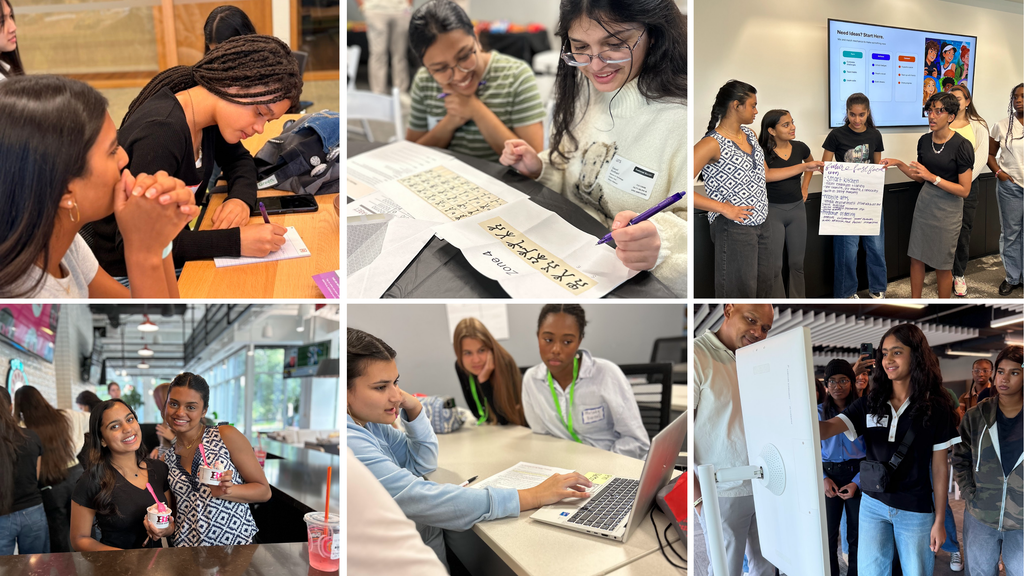
A collage of six photos showing diverse young women collaborating, presenting, brainstorming, working on computers, and socializing in a modern, energetic classroom and event setting.

For one week this summer, WIT Girls spent their days inside twelve different companies, not touring them from the outside, but sitting in on panels, taking apart computers, pitching business ideas, and more!

“I feel like I belong here”

At Cargill, after a session with engineers and interns, one of the program leaders asked the girls a simple question: how did it feel to meet engineers who looked like them? The answers said everything.

“It really made me feel like I belong here,” one girl said. Another put it even more plainly: “You can be whoever you want to be despite what you look like.”

That sense of belonging showed up again and again in the post-event survey. Girls wrote about feeling less pressure to have their whole future figured out, about realizing tech didn’t require a “perfect, linear pathway,” and about seeing women doing real work in rooms they’d assumed weren’t for them. One girl summed up the week this way: it “helped me see women’s representation in male dominated fields which helps me see myself in their place.”

Career paths that don’t go in a straight line

If there was one idea that followed the girls from company to company, it was this: nobody’s path looks the way you’d expect.

At Cox Enterprises, a panelist told the group her own story, she started out as a WIT Girl herself and is now interning at Cox. It’s exactly the kind of full-circle moment the program is built to create. The advice that stuck with the group that day was simple: you don’t have to pick one path and lock yourself into it forever. You’re not Rapunzel. You’re not stuck in the tower.

Girls heard some version of that message everywhere they went. At QTS Data Centers, employees from wildly different backgrounds and majors talked about how they ended up there. At Improving, girls heard “don’t apologize for being in spaces you should be in.” At Truist, a full-circle WIT member named Ramona Lopez, who used her own WIT network to land her internship there, told the girls to follow their passion until they find the spark, then stay flexible, because the path will change more times than they expect.

By the end of the week, it showed up in their own words. Nearly every girl who filled out the survey said the program changed how they think about their future, and the phrase “career paths aren’t linear” showed up so often it was practically a refrain.

Hands-on, not just talked-at

The girls didn’t just listen, they built things.

At Improving, they took apart a desktop computer piece by piece, then turned around and learned cryptology well enough to make bracelets encoded in Morse code and binary. At Cox, they interviewed a Cox employee and built her a custom couch prototype based on what she told them she wanted. At Fiserv, every girl built her own small business inside a live payment system, then pitched it Shark Tank style in front of the whole group. 

At Zebra Technologies, the day turned into a capture-the-flag game built around RFID tags, racing through a simulated supply chain, followed by a precision challenge to get as close as possible to a scanner without triggering it. At QTS, the week’s most talked-about moment might have been the last one: building the tallest tower they could out of marshmallows and spaghetti.

It’s not a coincidence that the moments girls came back to again and again in their survey responses were the hands-on ones. When asked what they’d want more of, the answer was almost unanimous: more activities, fewer straight lectures. It’s a note we’re taking seriously for next year.

Honesty, from people who’ve actually lived it

However, some memorable moments of the week weren’t activities at all, they were the honest conversations.

At State Farm, girls heard directly from leadership, one of whom told them, “It is normal to be uncomfortable, but you need to learn to work through it or you will hinder your growth.” At Inspire Brands, girls said their favorite part of the day was hearing that plenty of the professionals they met didn’t have their careers figured out early on, and ended up somewhere they never expected. At Inspiredu, a staff member named Marcus Hicks, Manager of Technology, told the story of showing up to an AP class with only pencil and paper while his classmates had laptops, until his brother’s old one changed everything. “One device can change a path,” he told them.

At The Coca-Cola Company, an intern panel left the girls with a line that captured the whole week: “The numbers are available to everyone. The story is your superpower.”

What the numbers say

Beyond the stories, the post-event survey backs up what we saw all week. The vast majority of girls rated their overall experience “Very Good” or “Excellent.” 100% of the responses said yes, they’d recommend the program to a friend, and the overwhelming majority want to stay involved with WIT Girls going forward.

More than that, girls reported real shifts, not just in what they know about tech careers, but in how they see themselves inside one. Confidence, belonging, connection to mentors, understanding of what the work actually looks like day to day: across the board, the numbers moved in the direction we hoped they would.

Thank you

None of this happens without the companies who opened their doors and the employees who showed up ready to be honest, generous, and genuinely present with these girls: Cargill, The Coca-Cola Company, Cox Enterprises, Fiserv, Improving, Inspire Brands, Inspiredu Atlanta, QTS Data Centers, Salesforce, State Farm, Truist, and Zebra Technologies. Thank you for giving these girls more than a tour. You gave them a version of the future where they can already see themselves.

And to every girl who spent her week asking questions, taking apart computers, pitching business ideas, and telling us exactly what she thought, thank you for showing up fully. That’s the whole point.

Women in Technology (WIT) creates possibilities for more women to explore, pursue, persist, and lead in technology careers.

Filed Under: Event/Program Recap, WIT Girls Tagged With: WIT Girls Career Exploration Week

Inside the August WIT Forum: Closing the Opportunity Gap

August 24, 2026 by ameredith

Three people stand smiling in front of a purple Women in Technology (WIT) backdrop, wearing business attire. Two women flank one man in the center.

Every WIT Forum starts with a question, and this month’s, delivered live to a packed room, cut right to it: is there really a promotion gap between men and women in tech?

Roughly 80% of the room said yes. And the data our panelists brought to the stage backed them up: according to McKinsey & Company and LeanIn.org’s Women in the Workplace 2024 report, for every 100 men promoted to manager, only 81 women were promoted at that same stage.  The gap doesn’t open up mid-career. It starts at the very first promotion, and compounds from there, into pay, into retirement contributions, into every opportunity that follows.

That’s the kind of insight WIT Forums are built to surface. But the real value of this session wasn’t in naming the gap. It was in what our panelists, Jasmine Grant, Ryan Radding, and Kanyatta Walker, gave the room to do about it.

Mentors help. Sponsors move careers.

One of the sharpest distinctions raised on stage: mentors are common. Sponsors are rare, and they’re the ones who actually advocate for you in rooms you’re not in. As one panelist put it, “who’s got the juice” in your organization? Who’s quietly taking on more, growing their scope, showing up in conversations before the job is even posted? Those are the people worth building relationships with, not because they can hand you a promotion, but because visibility, sponsorship, and opportunity tend to travel together.

Find your “superpower,” then talk about it.

Panelists pushed back on the idea that doing great work is enough on its own. In today’s environment, being your own advocate, professionally, not performatively, is part of the job. That starts with identifying what you uniquely bring (your “superpower,” as one panelist called it) and being intentional about how you communicate it, whether that’s in a 1:1, a hallway conversation, or the meeting before the meeting.

The system changes as you rise, and that’s not a secret you’re supposed to already know.

Another key point: promotion decisions get less personal and more institutional the higher you go. Early-career moves might be a single manager’s call; senior-level moves happen in rooms with names like leadership committees or promotion boards, rooms most people don’t know exist until someone tells them. Understanding who actually sits at that table, and who influences them, is part of navigating the system rather than just working hard within it.

Negotiate anyway, even when the answer is no.

The panel also tackled a common misconception directly: one attendee cited newer research that shows women do ask for raises and promotions at rates comparable to men, they’re just told no more often. The advice from the stage wasn’t to stop asking. It was to treat repeated “no’s” as information: know your market value, and be willing to look outside your organization’s walls if your organization won’t recognize it inside them.

What happens next

This is where WIT Forums do their real work, not in the panel discussion itself, but in what attendees carry out of the room. Every attendee left with a discussion guide to keep the conversation going with their teams, their WIT groups, and their own networks. That’s the multiplier effect of these sessions: one morning of insight, translated into hundreds of conversations across the companies represented in that room.

If this conversation resonated, there’s more where it came from. On October 9th, we’re hosting the WIT Careers in Action Summit: a half-day program focused on professional development, community, and intentional career advancement at every stage.

Register here: https://fundraise.givesmart.com/form/UV5PnA?vid=1qx6ax

Thank you to our Presenting Partner

None of this happens without the partners who make WIT Forums possible. Thank you to our presenting partner, Tier4 Group, for supporting this session from start to finish.


Logo with the words TIER 4 GROUP. The 4 is stylized in blue, incorporating a human figure into the design. All other text is in gray, and the design has a modern, clean look.

Thank you to our additional WIT Forum Partners

We’re also grateful to our additional partners for their continued investment in this community: Adapture, Brooksource, Cargill, CDW, Cox Enterprises, Fiserv, Genuine Parts Company (GPC), Georgia-Pacific, Google Cloud, Infor, Norfolk Southern, Pyramid Consulting, QTS, Rollins, Salesforce, Southwire, State Farm, Synchrony, The Coca-Cola Company, The Home Depot, and Truist.

Women in Technology (WIT) creates possibilities for more women to explore, pursue, persist, and lead in technology careers.

Filed Under: Event/Program Recap, WIT Forums

The Real Question Isn’t “Am I Ready for More?” It’s “Is This Worth It?”

August 14, 2026 by ameredith

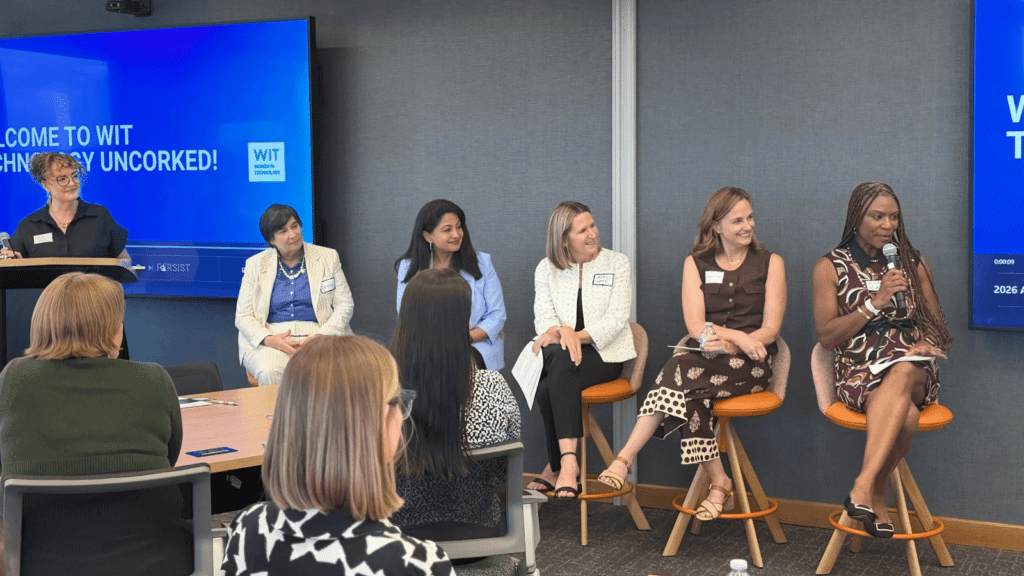
Five women sit on stools speaking at a panel in front of an audience, with a presenter standing at a podium and a blue screen behind them reading Welcome to WIT Technology Uncorked!.

Inside our August WIT Technology Uncorked

The August WIT Technology Uncorked brought together five women who have each, at some point, had to decide whether to stay, push back, or walk away from a role that looked good on paper but didn’t add up in practice. The theme: responsibility without recognition, and what to do when you’re handed the work but not the title, the trust, or the pay to match.

Our moderator opened with a story a lot of the room recognized immediately: being “promoted” in name only, more than once, by the same company. It set the tone for a conversation that wasn’t about complaining. It was about the moment of clarity that comes right before a real decision.

How do you know if it’s still worth it?

The first question of the night set up the whole conversation: how do you evaluate whether your organization still deserves your investment?

The answers converged on three things worth checking for, whatever stage of your career you’re in.

Peace of mind. Not just satisfaction with the work, but the ability to actually stop thinking about it when you walk away from your desk. If you’re doing your best thinking at 3am, that’s a signal, not a badge of honor.

Sponsorship, not just mentorship. One panelist drew a sharp line between the two: mentors give you advice in the room. Sponsors talk about you when you’re not in it. If leadership isn’t doing the second one, the first one doesn’t count for much.

Investment in the work itself, not just in you. A team can champion you personally and still starve your project of funding. That gap is worth watching.

Culture came up as its own category entirely, and the panel was clear that it isn’t one thing. There’s the culture of the company, and there’s the culture of your specific team, and they can be completely different animals. One panelist described watching a strong, inclusive culture quietly erode after the leader who built it moved on, and not seeing it happen in real time. “When you’re in it, you don’t see it,” she said. “Later on you’re like, that was a full force hurricane.”

Advocating from the inside

The conversation shifted to what it actually looks like to push for change without leaving. The advice was less about big speeches and more about specificity: figure out exactly what you need, ask for it directly, and frame it in terms the business understands.

One panelist described telling her manager plainly that she’d be gone certain afternoons for her kids’ games, and that the tradeoff was a better, more present version of her at work the rest of the time. Another described asking her provost for a salary adjustment based on public pay records, being turned down, and using that as the push to leave for an opportunity that nearly tripled her salary.

The through-line: know your own value before you ask anyone else to recognize it, and be ready to act on what you learn either way.

Investing in your own career, on your own terms

By the end of the night, the room had moved from strategy to something more personal. Several panelists talked about reaching a point where they stopped waiting for someone else to notice their work and started asking for more of it directly, whether that meant more responsibility, a renegotiated role, or a title that finally matched what they’d already been doing for years.

One panelist summed up the throughline of the whole evening: find the work you’d want to keep doing even if no one were watching, and then make sure someone is.

The evening closed with a moment of quiet reflection, giving everyone in the room a chance to write down what had landed for them, and where they might be carrying work that isn’t being recognized in their own careers right now, before moving into table conversations to talk it through with each other.

Meet the panel

  • Kerri Sauer (Moderator), FinTech & Technology Leader
  • Dorren Schmitt, Ph.D., VP of IT Strategy and Innovation IT & Cybersecurity, Allen Media Group (parent company of The Weather Channel)
  • Akhila Gullapalli, VP of Data and Tech, Fiserv
  • April Lake, CIO, Novelis
  • Leanne West, Chief Engineer of Pediatric Technology, Georgia Tech; Chief Research and Innovation Officer, Shriners Children’s; President, International Children’s Advisory Network
  • Windy Nicholson, former VP of Product M&A, Salesforce; Tech Executive & Nonprofit Board President


Women in Technology (WIT) creates possibilities for more women to explore, pursue, persist, and lead in technology. Learn more at mywit.org.

Filed Under: Event/Program Recap, Thought Leadership, WIT Technology Uncorked

WIT Campus Spring 2026 Cohort Closes: By the Numbers and in Their Own Words

July 10, 2026 by ameredith

WIT Campus Mentorship Program · Spring 2026

Nine weeks. Fifty-five college women. Fourteen industry mentors. And results that speak for themselves.

The WIT Campus Mentorship Program wrapped its Spring 2026 cohort on May 4, 2026, and we’re proud to share what happened when we brought college women and technology industry professionals together across a fully virtual, nine-week experience built for exactly this moment in a student’s career.

What the program set out to do

WIT Campus connects college women pursuing technology careers with industry professionals from the WIT community. Over nine weeks (March 9 through May 4, 2026), participants engaged in structured virtual small-group mentoring sessions with a clear mission: build job readiness, expand career awareness, grow professional networks, and strengthen the sense of belonging that keeps women in technology.

Each group completed five small-group sessions, with mentees grouped across institutions to encourage cross-campus connection. Standardized mentor guides and discussion prompts ensured every cohort had a consistent, high-quality foundation, while still leaving room for the real, honest conversations that make mentorship matter.

The numbers

We set ambitious targets. The Spring 2026 cohort didn’t just meet most of them. It exceeded them.

By program close, 94% of participants reported stronger job readiness confidence, and 84.6% said the program broadened their understanding of career paths in technology. Nearly nine in ten (88.1%) came away with a stronger sense of belonging in the tech community, and 83.3% grew their network of professional connections through the program.

The belonging score may be the most striking of all. Entering the program, only half of participants reported feeling a sense of belonging within the technology community. By close, that number had climbed to 88.1%, a 38-point gain that represents something more than a metric. It reflects what community actually feels like when it’s built intentionally.

On professional networks: at program start, nearly one in three participants (30.8%) reported zero personal connections to technology professionals. By the end, 83.3% said their network had grown, with the majority adding two or more new connections through the program.

In their own words

Data tells one story. The 24 mentee testimonials and 7 mentor reflections from this cohort tell another. Together, they give you the full picture.


On finding direction:

“I came into this program somewhat lost about my field and not knowing anyone. I wanted to learn more about the different ways I could stand out with my resume, and this mentorship program has helped me learn what recruiters are looking for.”

“I joined the WIT Campus Mentorship Program looking for direction, but I left with something much more valuable: confidence and clarity. As a computer science student, I had the technical skills, but I wasn’t always sure how to apply them or where I truly fit in the tech industry.”


On belonging:

“The WIT Campus Mentorship Program made me feel seen. As a woman pursuing a career in technology, I was looking for a sense of community and belonging in a field where women are often underrepresented… it became much more than that.”

“I feel a sense of belonging with other women in tech, and I feel better about networking and improving my skills. I feel much more confident in defining who I am in tech.”


On expanding what’s possible:

“I joined the WIT Campus Mentorship Program with a limited idea of what I could do in my technology career. I used to think I could only follow the path related to my major. Through this program, I realized there are many more roles I can explore.”

“I’ve become more concrete in my pathway, developed ways to make myself stand out on LinkedIn and in interviews, and I know where to seek help even when I feel like I don’t have someone to contact.”


On real outcomes:

“I would also like to give credit to this program for helping me develop myself professionally in such a way that I was able to secure an internship for this summer.”


From the mentors who made it happen:

“Mentoring has broadened my perspective by reminding me that everyone’s path into technology is different, and diverse experiences and viewpoints make our industry stronger.”

“What surprised me most was how much I learned from my mentees. Their resilience, curiosity, and openness pushed me to reflect on my own journey and reminded me why this work matters.”

“Many students are more capable than they realize, and thoughtful conversations can shift how they see themselves and their future in tech.”


What comes next

The Spring 2026 cohort is closed, but the momentum it built is not. The connections made, the confidence earned, and the career paths clarified over these nine weeks will carry forward into internship applications, job searches, and eventually into the next generation of women who mentor others.

That’s the arc WIT has always believed in: mentees become mentors, students become industry leaders, and communities grow stronger when the people who’ve found their footing turn around to help the next person find theirs.


Interested in mentoring the next cohort of college women in tech, or connecting your company with the WIT Campus program? Reach out to us at programs@mywit.org.

Women in Technology (WIT) creates possibilities for more women to explore, pursue, persist, and lead in technology. Est. 1992.

Filed Under: Event/Program Recap Tagged With: event recap, WIT Campus

The Meetings Before the Meetings

July 10, 2026 by ameredith

There’s a moment most of us have experienced: You walk into a room thinking a decision is still on the table, and you quickly realize it was made before anyone sat down. The meeting was a formality. You just didn’t know it.

The women who shape decisions, the ones who actually move things forward, know something the rest of the room doesn’t always see. The real work happens before the calendar invite goes out.

At a recent Women in Technology (WIT) Technology Uncorked event, a panel of senior leaders in technology and strategy gathered to talk about navigating power, pushback, and decision- making. And across every story they shared, one strategy surfaced again and again: Do the meetings before the meetings.

What that actually means

It’s not about going around people or playing political games. It’s about doing the relationship work that makes the formal meeting matter.

One panelist described leading a new product initiative at The Coca-Cola Company. She walked in with a room full of longtime employees who immediately pushed back. “We tried it. It won’t work. There’s a white paper that says so.” Instead of defending the idea on the spot, she paused. She went back and had individual conversations. She found out who had reservations, and more important, she learned why. She identified her champions. She understood the history.

Then she came back with a real business case, answers to the objections, and with the people in the room already partially won over.

“I had the meetings before the meetings,” she said. “And I love hearing the pushback, because that way you can position it when you’re in the real meeting. You can say, I heard you. This is what we’re doing about it.“

Influence doesn’t live in your title

Another panelist made a point that reframes how most of us think about organizational power. She had grown up in her company, risen through the ranks, earned her C-level seat, and discovered that one director in a finance support function had more influence over hiring decisions than anyone with a formal title.

“It wasn’t me with my C title or the CEO who told me it was approved. Ultimately, she had the influence and helped drive that for the entire organization.”

The lesson: Influence is informal and distributed. It lives in relationships, in trust, in who people call when they need to think something through. And you don’t find that out from an org chart. You find it by paying attention, building relationships across levels, and as one panelist put it, going to the food court.

“You start to see who hangs out with each other, whose kids go to school together, who’s neighbors with who. And then you start to understand how influence actually moves.”

Resistance Is data

Every panelist had experienced pushback. The kind that’s obvious, and the kind that isn’t. Silence in a meeting. An idea attributed to someone else. A decision quietly reversed after you leave the room.

Their advice wasn’t to avoid conflict or push harder. It was to get curious.

“When I find resistance, I say: ‘I feel some tension here. Tell me what I’ve missed. Help me understand what you see as a blocker.” One panelist described this as turning resistance into information. “The resistors give you so much data. They show you the path. They tell you exactly what you need to address.”

That reframe matters. Pushback isn’t a wall. It’s a map.

Building alignment is the job

As careers advance, the work shifts. It’s less about executing tasks and more about building consensus, removing obstacles, and moving ideas through people.

“When we’re younger in our careers, it’s all about the task,” one panelist reflected. “The further we progress, all of my time is spent shaping, influencing, working with peers, and helping move ideas forward.”

That’s not a soft skill. That’s leadership. And it requires a different kind of preparation than most of us were taught.

The meeting before the meeting isn’t a trick. It’s the practice of showing up to formal moments with the relationships, information, and alignment already built. It’s how decisions get made, and how you get to be part of making them.

Try it this week

Before your next important meeting, ask yourself:

  • Who in this room hasn’t been heard yet?
  • Who are my potential champions, and have I talked to them?
  • What’s the real resistance, and what does it tell me about what I still need to address?
  • Is there a conversation I can have before that would make the formal meeting more productive?

The goal isn’t to predetermine the outcome. It’s to show up prepared, to bring people along, and to lead in a way that makes the work, and the people doing it, better.


This insight was drawn from a WIT Technology Uncorked event on navigating power, pushback, and decision-making. Women in Technology (WIT) creates possibilities for more women to explore, pursue, persist, and lead in technology. Learn more at mywit.org.

Filed Under: Event/Program Recap, Thought Leadership, WIT Technology Uncorked Tagged With: career development

WIT Connect 2026 Recap

April 29, 2026 by ameredith

WIT Connect 2026 was everything this community stands for: energy, generosity, purpose, and the undeniable power of what happens when Georgia’s technology leaders come together in the same room. On April 29th, more than 550 supporters gathered for an evening that was as inspiring as it was fun—celebrating the women and girls who are shaping the future of technology, and raising critical funds to power WIT’s programs for another year. Thanks to the leadership of our Presenting Sponsor, Cox, and a community that showed up in full force, WIT Connect 2026 raised $339,000 to fuel the year ahead.

An Evening That Delivered

WIT Connect is not a typical gala. It is a high-energy gathering that blends meaningful conversation with friendly competition, peer connection with senior leadership access, and celebration with accountability. Attendees left having made real connections, heard honest perspectives from leaders they admire, and contributed directly to a mission they believe in.

The Silent Auction featured exceptional experiences and items donated by partners across the Atlanta technology community. The energy in the room during bidding was electric, and the generosity on display was a testament to how deeply this community invests in WIT’s work.

Why WIT Connect Matters

Every dollar raised at WIT Connect goes directly to supporting WIT Girls, WIT Campus, WIT YoPros, and the forums and programming that have built this community over three decades. When you show up for WIT Connect, you are not just attending an event. You are funding the scholarship that helps a young woman pursue a computer science degree. You are supporting the middle schooler who just discovered she loves coding. You are backing the early-career professional who needs a community to help her persist.

Save the Date for 2027

Did you miss it this year? Mark your calendar now: WIT Connect 2027 is Thursday, May 6, 2027. Sponsorships and tickets will open in early 2027. In the meantime, stay connected by subscribing to our newsletter and following WIT on social media.

Filed Under: Event/Program Recap Tagged With: Atlanta, community, fundraising, technology, WIT Connect

AI and Your Career: Key Takeaways from a Recent WIT Forum

March 21, 2026 by ameredith

The conversation about artificial intelligence and career development is no longer hypothetical. It is happening right now, in boardrooms, on factory floors, and in every corner of the technology workforce. At a recent WIT forum, a panel of senior technology leaders came together to share candid perspectives on what the AI moment means for women in tech.

AI Is No Longer Experimental — It Is a Competitive Requirement

When attendees were asked how AI feels in relation to their careers, the most common responses were “competitive advantage” and “skill requirement.” The panelists agreed: this is not hype, and it is not coming someday. AI is already reshaping knowledge work in ways we have not seen before. Those who adopt early will have a distinct edge. Those who wait may find themselves left behind.

Gender Gaps in AI Adoption Are Real — and Worth Naming

Research suggests that women are less likely than men to self-start their AI learning journeys. Imposter syndrome, experienced by a significant majority of women at some point in their careers, plays a real role. The takeaway: culture matters enormously, and not everyone is working in a supportive one.

If Your Organization Is Not Giving You Time, Find It Yourself

The companies leading on AI are intentionally carving out time for their teams to learn, experiment, and fail safely. But for those without that support: do not let your company’s priorities determine your learning. Start small. A ten-minute YouTube video. A podcast on your commute. A few questions typed into a free AI tool on your own time.

Diversity Is Not Separate from AI — It Is Essential to It

Generative AI models are built on data, and that data carries bias. Diverse teams are not just a values-driven priority in the AI era; they are a technical and strategic necessity. Women who step into AI roles are helping to shape technology that will affect everyone.

The Bottom Line: Start Somewhere

AI may not replace your job. But people who understand AI will be more competitive for it. The skill gap is real, the opportunity is real, and the moment to begin is now.

Filed Under: Event/Program Recap Tagged With: AI, artificial intelligence, career, forum, technology, women in tech

  • 1
  • 2
  • Next Page »
wit-logo-white.svg

About us

  • Our Mission and History
  • WIT Leadership
  • Annual Reports
  • News and Insights
  • WIT Career Center

Programs

  • Pre-Career
  • Careers in Action
  • Community-Wide Events
  • Program Events

Support

  • Partnerships
  • Strategic Volunteering
  • Donate
  • Shop

CONtact us

1750 Powder Springs Rd
Suite 190 #256
Marietta GA 30064

Phone: 470-264-1780

Charity Navigator Four-Star 2026 badge with four blue stars in squares, charity name at top, and rounded blue border.
A white square badge with text: Platinum Transparency 2026 in black, and Candid. below, bordered by a light blue frame.
Connect with Us
Facebook Instagram LinkedIn

WIT is a tax-exempt 501(c)(3) nonprofit organization. Your gift is tax-deductible as allowed by law. WIT's tax ID number is 31-1839582.

© 2026 Women in Technology. All Rights Reserved.
Privacy Policy | Accessibility